
Review · MALAGA
45 minutes flamenco dance class for family in Málaga
The best thing about this 45-minute Málaga flamenco class is its welcome to very young children. From age three, you and your family can learn simple steps together, move to child-friendly flamenco music, and finish with a cheerful rumba routine rather than sit quietly through a formal show.
I like the small group limit of seven, which gives Caterina Grudtsina room to help families one by one. I also like the use of props such as a shawl, fan, hat, and cape. The one point to check is family participation: one family found that a father could not watch from the side, so ask ahead if every adult must join the class.
Key points at a glance
- Built for children from age three: The movements are simple, gentle, and easy to copy.
- A real family activity: Parents and children warm up, practice, and dance together.
- Rumba is the main payoff: You learn a fun, popular Andalusian style used at parties across Spain.
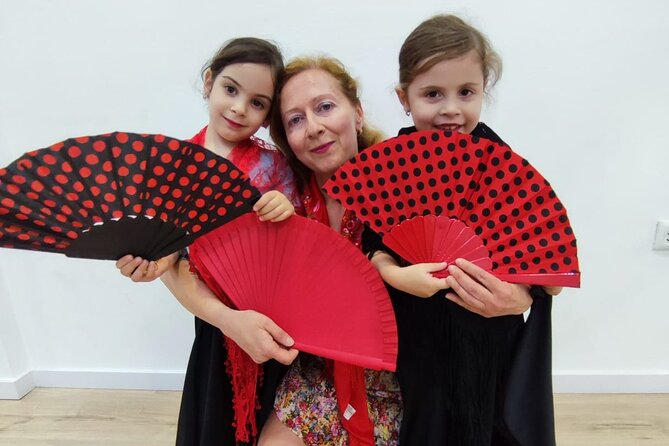
- Props make it playful: Shawls, fans, hats, and capes add color and help hold young children’s attention.
- Small group of seven: The instructor can give personal help instead of teaching to a crowded room.
- Central Málaga meeting point: The class takes place very close to Plaza de la Constitución.
Why this Málaga class works for young children
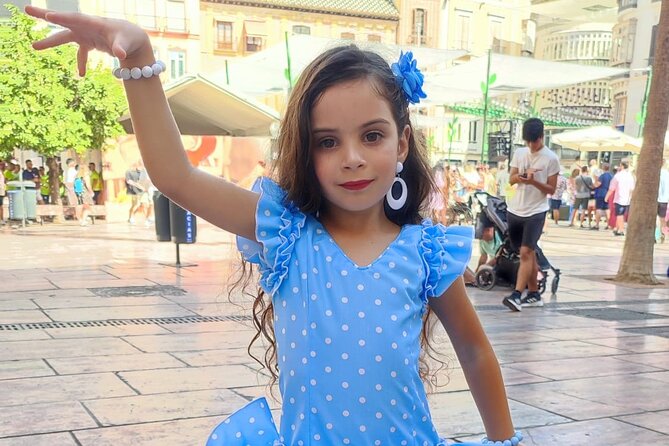
Flamenco can look fierce and complicated when you watch professionals. This class takes a kinder route. You begin with easy movements, follow the instructor’s pace, and build toward a short dance instead of trying to master a full performance.
That matters when you bring a three-, five-, or six-year-old. Young children can lose interest quickly if an activity demands too much precision. Here, the goal is not perfect technique. It is to let your child copy, move, smile, and gain a first feel for Spanish dance.
The class is adapted for children from age three, and the music is chosen with children in mind. That does not make the activity less authentic. It makes the introduction sensible for a young family. You still work with flamenco foot and arm positions, rhythm, and props, but the teaching stays light and manageable.
I would expect the experience to suit children who enjoy copying adults, music, or movement. A shy child may need a little time before joining in. The small group helps, but you should still frame the class as play rather than a performance test.
More Flamenco Dance Classes in Malaga:
- Málaga: Learn to dance flamenco rumba in 45 minutes
★ 4.9 · 245 reviews - Fun, fast, flamenco: learn to dance flamenco rumba in 45 minutes
★ 5.0 · 112 reviews - 45 minutes flamenco dance class for family in Málaga
★ 5.0 · 14 reviews
A gentle warm-up gets everyone moving
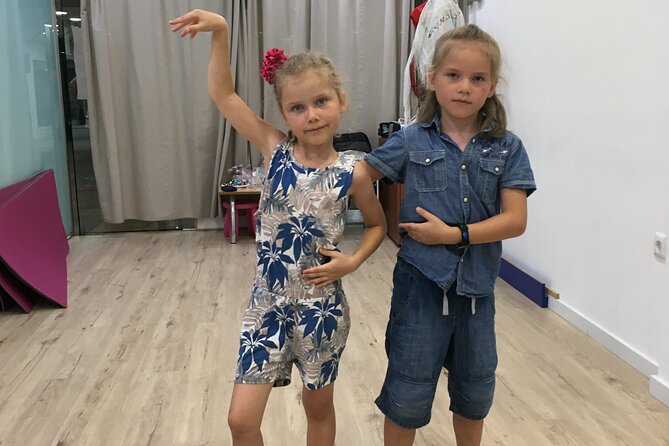
The class starts with a gentle warm-up that you do with your child. This is a useful opening because it gives everyone time to get comfortable in the room and with the instructor before the faster footwork begins.
You do not need to arrive as a dancer. The warm-up is there to loosen up and help you and your child pay attention to the same instructions. For parents, it also gives you a clear role. You are not simply dropping your child at an activity. You are part of the dance.
That shared start is one of the strongest reasons to choose this class over a standard adult lesson. You can encourage your child by copying the movement yourself, and your child can watch you make the same small mistakes. That usually takes pressure off both of you.
The session lasts only 45 minutes, which is a good length for a family stop in Málaga. It gives you enough time to learn a few ideas without asking young children to concentrate for half a day. I would still arrive in comfortable clothes and shoes so that the warm-up feels easy from the first minute.
Basic feet and arms before the fun routine
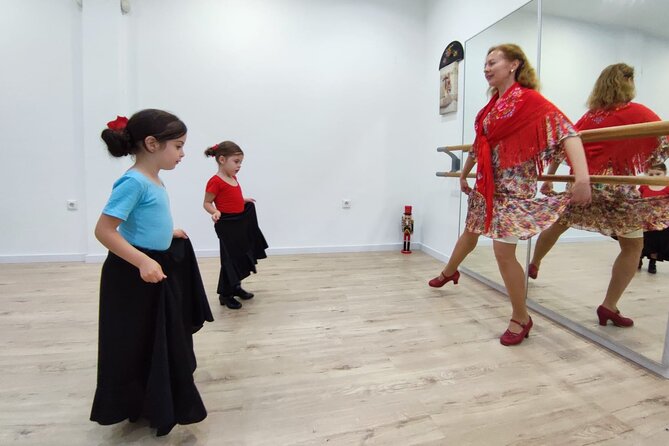
After warming up, Caterina introduces basic exercises for the feet and arms. These are the building blocks of flamenco, but they are presented in a simple way that children can follow.
The footwork is not about speed. Your child gets a chance to understand where the feet go, while the arm movements add the expressive quality that makes flamenco recognizable. You may find that the arms are easier for younger children to enjoy than the more precise foot exercises.
The instructor teaches in English and Spanish. That is useful for mixed-language families, and the physical nature of the lesson means you can learn by watching even if you do not understand every word. Clear demonstration matters more than a long explanation here.
With a group limited to seven people, the teacher can see how each family is keeping up. That is a meaningful advantage for children. A large class can leave a young dancer hidden at the back or confused by a fast change. A small group makes it easier to repeat a movement and keep the mood upbeat.
Do not expect a technical flamenco course. In 45 minutes, you get a friendly introduction to posture, rhythm, arms, and simple footwork. If you already dance, you may want something more demanding. If your aim is a first family experience, the level is well chosen.
Rumba gives the class its Spanish party feel
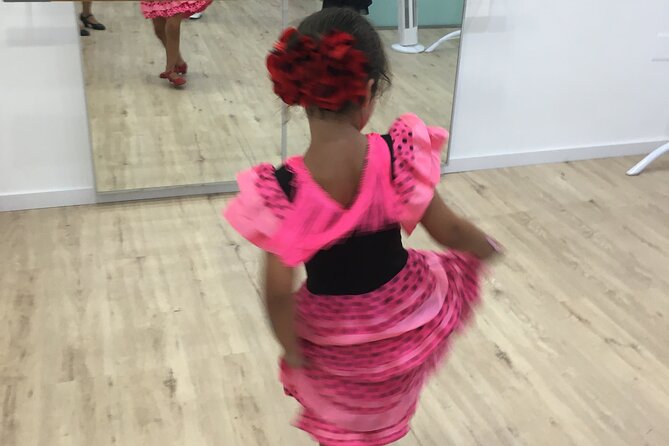
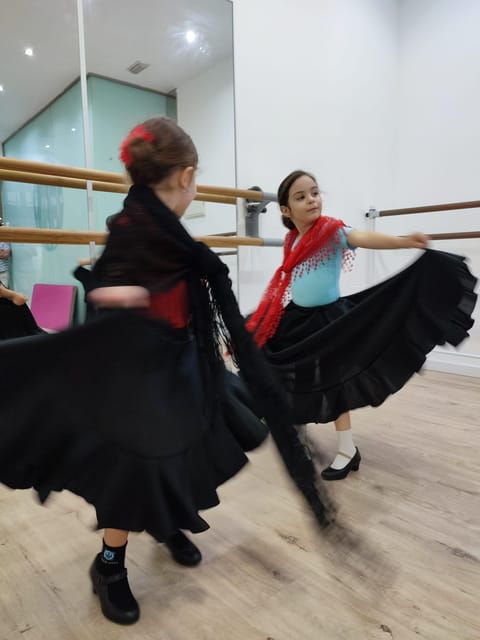
The main choreography is a flamenco rumba. This is a simple and popular style in Andalusia, and it is often danced at parties across Spain. For a family class, it is a smart choice because the rhythm is lively and the movements can be simplified without losing their character.
You learn the routine in small pieces, then link those pieces together. The satisfaction comes from recognizing the sequence by the end of the class. Your child does not need to remember every detail perfectly. Following part of the pattern, turning with the music, and joining the group is enough to make the activity feel complete.
Rumba also gives the lesson a social feel. It is less solemn than a staged performance and more connected to the idea of dancing with family and friends. You get a small taste of how dance fits into everyday celebration in Spain, rather than only seeing flamenco as a serious art form performed under bright lights.
I like that the class includes this final routine instead of ending with isolated exercises. It gives you something concrete to take away. You may remember the rhythm, a few arm positions, or the way your child suddenly joined in after watching for several minutes.
More Flamenco Shows in Malaga:
- Malaga: Teatro Flamenco Malaga Live Flamenco Show
★ 4.7 · 4,254 reviews - Malaga: Authentic Flamenco Show at El Gallo Ronco
★ 4.7 · 885 reviews - Malaga: Show and Food at Alegría Flamenco and Restaurant
★ 4.6 · 740 reviews - Malaga: Authentic Flamenco Dinner Show at Restaurant VinoMio
★ 4.4 · 457 reviews
Shawls, fans, hats, and capes keep the energy high
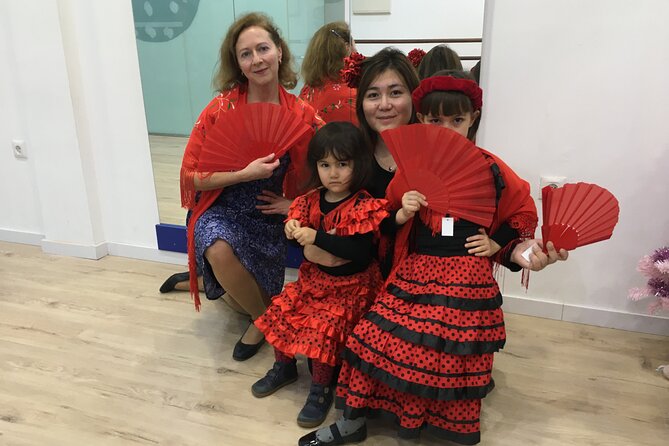
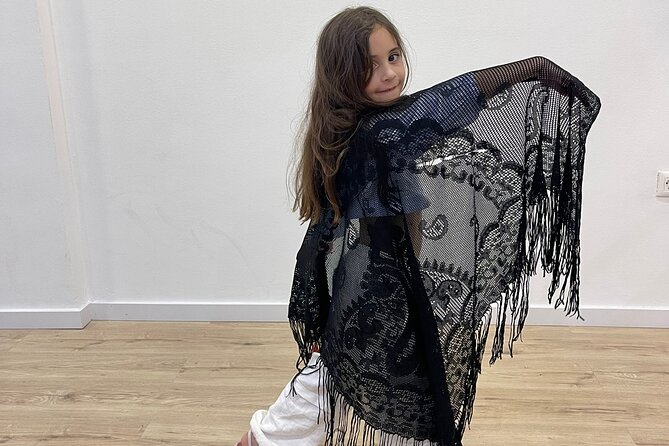
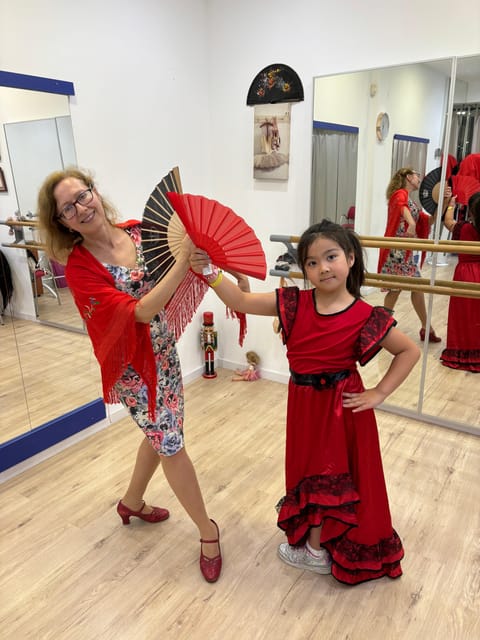
The props add a playful layer to the lesson. You may work with a shawl, fan, hat, or cape as part of the exercises. These objects help children understand that flamenco is not only about feet. Hands, arms, posture, and presentation all matter.
For younger children, the props can be the moment when the class really clicks. A fan is easy to open and close, while a shawl gives the arms a wider sweep. Hats and capes invite pretend play, which can help a hesitant child take part without feeling watched.
The props also give parents and children a shared task. You can practice holding the item correctly, copy the instructor, and laugh when the movement goes slightly wrong. That is part of the value. This is a cultural activity, but it is also a chance to spend focused time together.
The French-speaking family who attended the class used several of these items in a simple, friendly session with Caterina. That detail is useful because it shows the class is not limited to one narrow form of flamenco. It introduces a range of familiar stage and party elements in an approachable way.
You should not expect every prop to become a polished performance tool in one session. The point is discovery. Your child gets to feel the movement of the shawl or fan and see how an ordinary gesture becomes part of dance.
A central meeting point makes this easy to fit into Málaga
The meeting point is very close to Plaza de la Constitución, Málaga’s main square. That location is practical if you are already exploring the center on foot. You can pair the class with a walk through the old city without setting aside time for a long transfer.
The information provided does not give a specific studio address in the meeting details, so check the exact instructions before you leave. This is especially important with children, who are not improved by a rushed search for the right doorway.
The central setting also makes the class a useful break from sightseeing. One parent described it as a welcome change from the usual routine of walking and looking. I agree with that logic. Málaga rewards wandering, but children may remember the trip more fondly if the day includes something they can actively do.
Plan your shoes and clothes with movement in mind. Comfortable shoes and comfortable clothing are the only stated requirements, but they are worth taking seriously. Stiff clothes or shoes that pinch will make footwork and arm movements less enjoyable.
Is $47 per person good value?
At $47 per person, this is not the cheapest way to fill 45 minutes in Málaga. The value depends on what you want from the activity.
If you are paying for a family of four, the total is significant. You are not buying a long tour, a meal, or a major attraction ticket. You are paying for a short, guided cultural activity in a small group, with a specialist instructor and hands-on teaching.
I think the price makes more sense for families who value shared experiences. You get direct instruction, a child-friendly format, music, props, and a finished rumba sequence. A private family photo or video of the final dance may become more memorable than another hour of sightseeing, though you should follow the instructor’s rules about filming.
The small group is an important part of the calculation. With no more than seven participants, the lesson is not simply a demonstration from the front of a crowded room. You are more likely to receive corrections, encouragement, and room to repeat the steps.
The class also has free cancellation up to 24 hours before the start time, and you can reserve now and pay later. Those terms reduce some booking risk when your Málaga plans may change. Check the available starting times before booking, since the duration is fixed at 45 minutes but the schedule varies.
What families should know before booking
This class is best for families who want to take part together. The description presents it as an activity for children with their mother, father, or other family members, and the warm-up and exercises are designed for shared participation.
I would not book it expecting to sit on the sidelines while your child dances. One person reported that the father was not allowed to watch, which suggests that the format may require participating adults to join rather than observe. Contact the provider if you have one adult who wants to supervise without dancing.
The class is taught in English and Spanish. That makes it accessible to many international families, but the lesson still relies heavily on watching and copying. You do not need advanced language skills to try the movements, though your child may benefit from knowing that the teacher will give instructions in both languages.
The published rating is 4.9 from nine reviews, with the strongest praise focused on children staying happy and engaged, the teacher’s kindness, and the ease of following the steps. One family with children aged five and nine found the format suited both ages. Another family with two six-year-olds had a very good time, though the question of watching from the side came up.
Those details point to the class’s main strength: it keeps the bar low enough for children while still giving adults something enjoyable to do. It is not designed to train a young dancer in formal flamenco technique. It is designed to make the first step inviting.
Who should book this flamenco experience?
I would choose this class for:
- Families with children aged three and older
- Parents who want to take part rather than watch
- Families looking for a break from walking and sightseeing
- First-time flamenco dancers
- Children who enjoy music, copying movements, and costume-style props
- Visitors staying near central Málaga
I would think twice if your child strongly dislikes group activities, needs a parent to observe from outside, or expects a full stage show. The class is active and participatory. It is also short, so older children or adults seeking serious technical training may find it too basic.
For mixed-age families, the simple structure is a benefit. A younger child can enjoy the music and props, while an older child can try to remember more of the rumba sequence. Adults can choose how seriously to take the footwork. Nobody needs to perform at the same level.
My take: book it for connection, not perfection
I recommend this Málaga flamenco class if you want a warm, practical introduction to Spanish culture that your children can share with you. The short format, central meeting point, small group, and easy exercises all work in its favor.
The strongest reason to book is not the promise of becoming a flamenco dancer in 45 minutes. It is the chance to move together, try a familiar Andalusian dance style, and give your child a cultural memory built around participation. Caterina Grudtsina’s class seems especially suited to families who want a kind instructor and a relaxed first go.
At $47 per person, compare the cost with the importance you place on family activities. Confirm the participation rules if one adult wants to watch, then bring comfortable shoes, comfortable clothing, and a willingness to look a little silly. That is often exactly how a good family holiday memory begins.
FAQ
How long is the family flamenco class in Málaga?
The class lasts 45 minutes.
What age children can join the class?
The class is adapted for children from age three.
Where does the class meet?
The meeting point is very close to Plaza de la Constitución, Málaga’s main square.
What language is the class taught in?
The instructor teaches in English and Spanish.
What will I learn during the class?
You will begin with a gentle warm-up, practice basic foot and arm exercises, learn a simple flamenco rumba choreography, and use props such as a shawl, fan, hat, or cape.
What should I wear and bring?
Wear comfortable clothes and comfortable shoes.
Newly listed in Malaga
- 45 minutes flamenco dance class for family in Málaga★ 5.0 · 14 reviews
- PREMIUM TAPAS TOUR: Paella, Tapas, Winery and Flamenco★ 4.5 · 36 reviews
- Flamenco Benalmadena Show★ 5.0 · 25 reviews
- Flamenco, Tapas and Wine Tour: Best of Málaga in one Evening★ 5.0 · 52 reviews
- Malaga: The Ultimate Flamenco & Tapas Tour★ 5.0 · 18 reviews
- Andalusian Horses and Flamenco show with transportation★ 4.0 · 77 reviews
- Tablao Flamenco Los Amayas Admission Ticket★ 5.0 · 3 reviews
- Authentic Flamenco Show Malaga★ 4.5 · 48 reviews
Flamenco Dance Classes, compared.
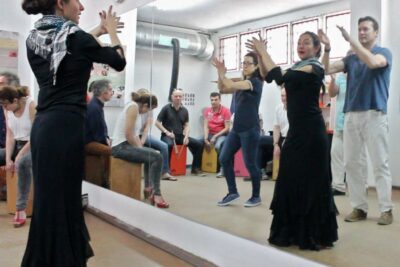
Flamenco Dance Lesson: 60-Minute Class in Seville
Read our review →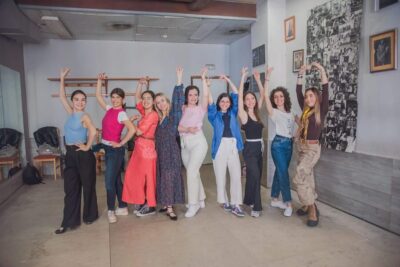
Flamenco Dance Lesson with Optional Show in Seville
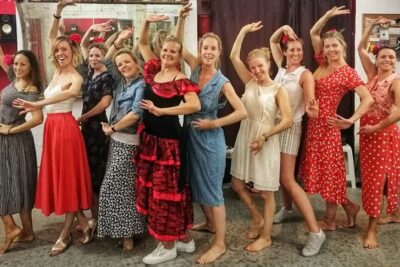
Read our review →
Learn to Dance Flamenco from Zero: Fun Beginners’ Dance Class
Read our review →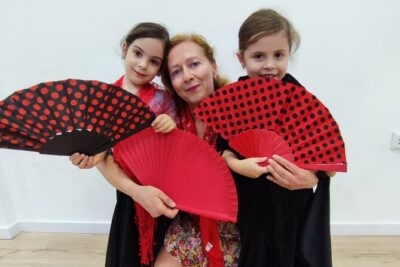
45 minutes flamenco dance class for family in Málaga
Read our review →
Madrid Wine Tasting, Flamenco Class and Trendy Bar
Read our review →Browse the lists this tour appears in