
Review · BARCELONA
Barcelona: Old Town Artistic Tour & Flamenco Show
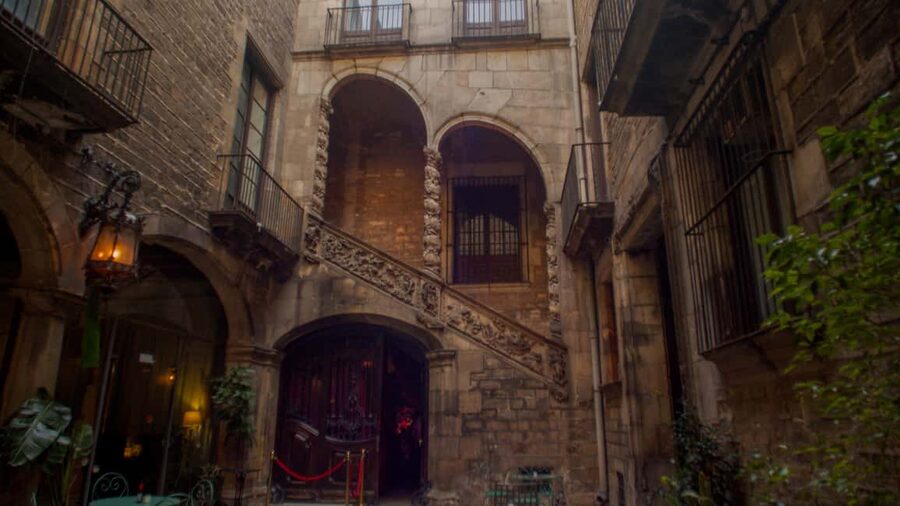
Barcelona’s creative spirit comes into focus on this four-hour walk, which begins in rough-edged El Raval and ends with flamenco inside Palau Dalmases, a Baroque palace dating to the 17th century. The route joins street art, medieval lanes, Roman remains, old theatres, and local performance.
I like the small group, limited to 10 people, because it gives the artist-guide room to tell stories instead of barking facts at a crowd. I also like the mix of districts: El Raval feels modern and bohemian, while the Gothic Quarter and El Born bring older Barcelona into the picture. The main drawback is simple: this is a long walking tour with many stops, and food and drinks are not included.
Key points at a glance
- A creative start in El Raval: See urban art, independent energy, and streets shaped by artists, musicians, and performers.
- Roman and medieval Barcelona: Walk past the Temple of Augustus, Roman walls, the cathedral, and Bishop’s Bridge.
- A small group of up to 10: The format suits visitors who prefer conversation and personal attention.
- Artist-guides who perform: Guides may use sketches, stories, or short live performances to explain the city.
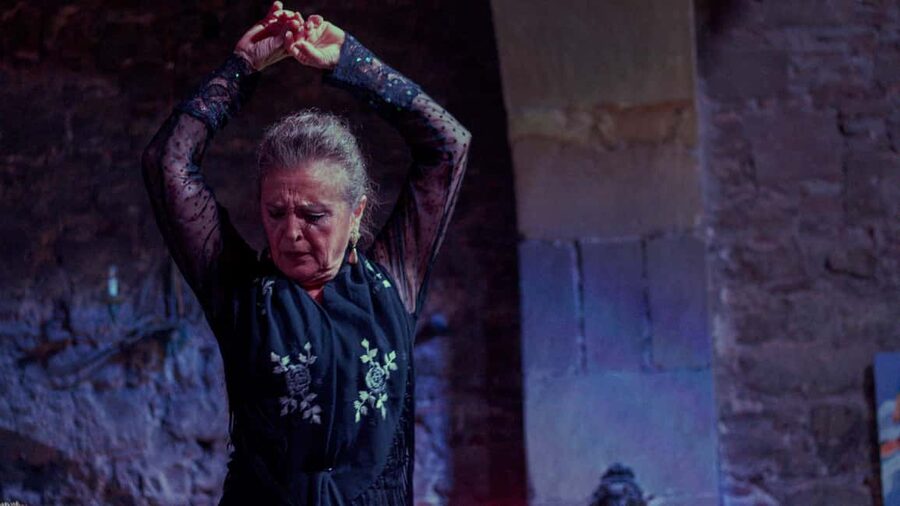
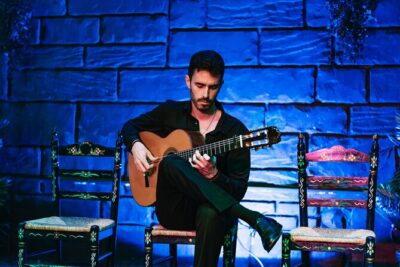
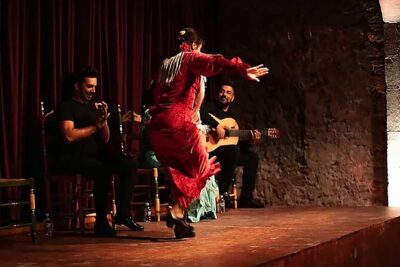
- Flamenco in a palace: Finish at Palau Dalmases with live guitar, singing, and dance.
- A full four-hour route: Wear comfortable shoes and expect steady walking through historic neighborhoods.
Why this Barcelona tour feels different
Many city walks treat Barcelona like a checklist of famous buildings. This one takes a more artistic route. You move through three central districts, but the emphasis is not only on architecture. The guide connects streets, theatres, artists, legends, and everyday city life.
That approach matters in Barcelona. The Old Town can look like a maze of handsome façades and narrow lanes when you walk through it alone. A good guide helps you notice the layers: Roman Barcelona under the medieval city, old religious buildings beside modern art, and grand palaces now surrounded by cafés and bars.
The tour also makes a smart choice by finishing with a show rather than ending at the last monument. After several hours on foot, you sit down in a historic setting and watch flamenco. It gives the experience a clear finale instead of leaving you at a random street corner.
The small-group size is another real advantage. With no more than 10 participants, you can hear the guide in narrow lanes and ask questions without fighting a crowd. Several guides have been praised for making the walk personal and theatrical. Daniele was noted for kindness and humanity, while Marcus was singled out for storytelling. Carlos brought humor to the old districts, and David, an actor, used his performance skills to explain the city.
The guide assigned to your departure may be different, so do not book solely for one particular name. Still, the experience clearly depends on a guide who can tell a story, not just point at a building.
More Flamenco and Tapas Walking Tours in Barcelona
- Private Tour: Tapas, Wine & Flamenco Show in Barcelona’s Old Town
★ 5.0 · 317 reviews - Barcelona Old Town Night Small Group Tour with Tapas & Flamenco
★ 4.5 · 277 reviews - Montjuïc Walking Tour With Optional Flamenco Show
★ 5.0 · 196 reviews
Starting at Plaça de la Universitat
The meeting point is by the metro station in the center of Plaça de la Universitat. This is a practical place to begin, since it is easy to reach by public transportation and puts you close to El Raval.
From here, the route moves toward Teatre Goya. You get a short guided visit and photo stop, with about 10 minutes of walking around the area. The theatre helps set the tone for the tour: Barcelona’s creative identity is not limited to museums. It also lives in stages, rehearsal rooms, street corners, and old neighborhoods.
Next comes Carrer de Joaquín Costa, another short stop with time for photos and explanation. The street is part of El Raval’s more bohemian side, where colorful façades, urban art, shops, and local life create a less polished feel than the postcard center.
That contrast is useful. El Raval has a complicated past as a marginal quarter, and its streets have long attracted artists, musicians, and people looking for affordable space and a less formal setting. The guide explains how the neighborhood became a kind of creative laboratory. You get a better sense of the district by walking through it rather than simply seeing its name on a map.
El Raval, from street art to old institutions
The Barcelona Museum of Contemporary Art, known as MACBA, is the next major point. The stop lasts about 15 minutes and focuses on the museum area and its place in the city’s modern art scene.
You do not enter the museum as part of this tour, so think of this as an outside introduction rather than a museum visit. That is both a benefit and a limitation. You get context without using a large part of your four hours indoors, but visitors who want galleries and exhibitions will need to plan a separate visit.
The route then reaches the Fundació Privada Casa de Misericòrdia de Barcelona. This stop shows another side of El Raval, with older institutional buildings and a sense of how the neighborhood changed over time. The guide may add sketches, stories, or a short performance, depending on the person leading your group.
The Old Hospital de la Santa Creu follows, with another 15-minute stop. Its old courtyards and buildings offer one of the most atmospheric pauses on the walk. This is the kind of place that benefits from explanation, since the details are easy to miss if you hurry past.
You should expect plenty of photo stops rather than long formal visits inside buildings. That keeps the route moving, but it also means the tour is best for seeing a broad slice of the city instead of studying one monument in depth.
From the Liceu to La Rambla
The walk continues toward the Grand Theater of Liceu. The visit here is listed as a photo stop of about 15 minutes. The theatre represents Barcelona’s grand performance tradition, and it creates a useful link between the city’s formal cultural institutions and the flamenco show waiting at the end.
From the Liceu, you reach La Rambla for another short stop. This famous avenue is one of Barcelona’s best-known public spaces, but it can feel very different from the narrow lanes you have just explored. Your guide helps place it in the wider story of the city rather than treating it as a quick photo backdrop.
The tour does not include food or drinks, so La Rambla is not a scheduled meal break. If you need water or a snack, plan ahead rather than assuming the walk will pause for refreshments. Four hours on foot can feel long, especially in warm weather.
Another stage worth an evening:
- Barcelona: Tablao Flamenco Cordobes with Food/Drink Options
★ 4.6 · 4,368 reviews - Barcelona: Flamenco Show with Drink Option at La Rambla
★ 4.7 · 3,770 reviews - Tablao Flamenco Cordobes on Rambla Barcelona with Dinner Option
★ 4.5 · 2,756 reviews - Barcelona: Flamenco Show with Dinner at Tablao de Carmen
★ 4.7 · 2,009 reviews
Entering the Gothic Quarter
From La Rambla, the walk turns into the Gothic Quarter. The Basilica de Santa Maria del Pi is one of the first notable stops, with around 10 minutes for photos and explanation. Its presence helps you see how religious buildings shaped the Old Town’s streets and public spaces.
The route then reaches Barcelona Cathedral, where you have about 15 minutes for a photo stop. The cathedral is one of the major visual anchors of the Gothic Quarter, but the real pleasure here is the approach. Narrow medieval alleys suddenly open into larger squares, and the changes in scale make the district feel more dramatic.
Next comes Plaça de Sant Felip Neri. This small square is one of the Old Town’s most memorable spaces, and its quiet atmosphere offers a sharp change from La Rambla. The stop lasts about 10 minutes, enough for the guide to explain the place and give you time to look closely.
The Gothic Quarter is where the artist-guide format can pay off most. A standard tour might name the cathedral and move on. Here, the guide may connect the street plan, stories, Roman foundations, and visual details through performance or sketches. That can make the district easier to remember after you leave Barcelona.
Roman Barcelona and Bishop’s Bridge
The Temple of Augustus is another short stop, with around 10 minutes for photos. Its surviving columns are a strong reminder that Barcelona is not only medieval. Roman history is built into the modern city, sometimes behind later walls and sometimes standing in plain sight.
You then pass Bishop’s Bridge, also known as the Pont del Bisbe. It is one of the Gothic Quarter’s most photographed details, with its ornate stonework spanning the narrow street. The stop gives you a chance to look up, since the Old Town rewards attention above eye level as much as at street level.
These Roman and medieval stops are close enough to connect naturally, but the number of locations means the explanations must stay fairly concise. If you enjoy a single site explained in great depth, a dedicated Gothic Quarter tour may suit you better. If you want a strong first look at several layers of Barcelona, this route makes good use of its time.
El Born and Santa Maria del Mar
The final neighborhood is El Born, one of the most atmospheric parts of the Old Town. The route takes you among old palaces, artisan workshops, and lively bars. Compared with El Raval, El Born feels more polished, but it still has narrow streets and a strong local identity.
The stop at St. Mary of the Sea Cathedral, or Santa Maria del Mar, provides the district’s major architectural point. You get about 10 minutes for photos and sightseeing. The church is a natural transition to the final part of the tour because it shows the scale and wealth of medieval Barcelona, while the surrounding streets bring you back to daily city life.
I like ending the walking portion here before the flamenco performance. You have crossed a clear sequence of neighborhoods, from the artistic edge of El Raval through the Roman and medieval core to El Born’s old palaces and workshops.
The walking route is wheelchair accessible according to the tour information, but you are still moving through historic neighborhoods with narrow streets and old surfaces. If you use a wheelchair or have particular mobility needs, confirm the exact route and access arrangements before booking.
Flamenco inside Palau Dalmases
The tour ends at Palau Dalmases, a Baroque palace from the 17th century. This is not a large concert hall setting. The show is described as intimate, which suits the old building and gives the final performance a close, personal feel.
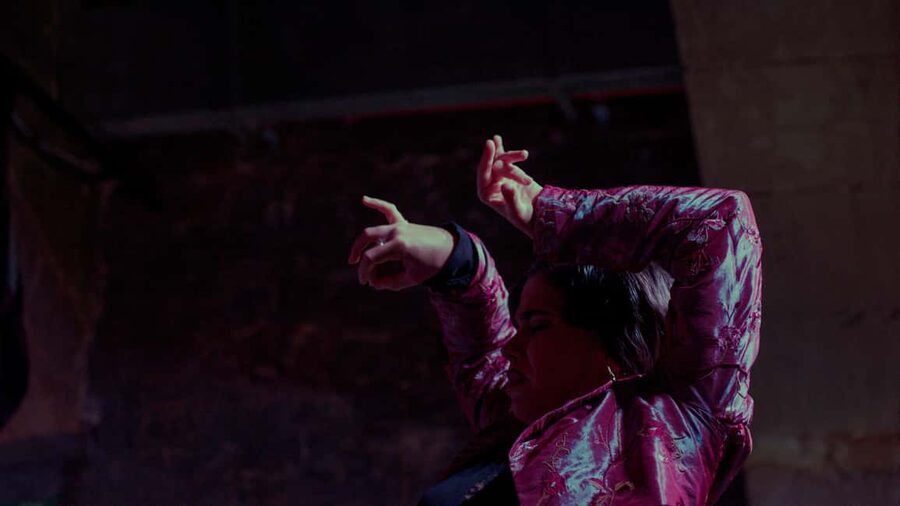
You watch dancers, guitar, and singing in a historic interior. The flamenco is not an optional extra added to fill the last few minutes. It is the payoff for the entire route, bringing together Barcelona’s theatre culture, artistic spirit, and love of live performance.
The show has been praised as powerful and authentic, and it clearly became the favorite part for some people who booked mainly for flamenco. Others arrived expecting a show and found that the walking route gave them a much better introduction to the city than they would have had on their own.
That balance is important. If you want a full-length flamenco evening with dinner, drinks, or several hours of performances, this is not that product. The show is one part of a four-hour walking experience. If you want a cultural evening attached to a thoughtful Old Town route, it is a strong combination.
What the $71 price includes
At $71 per person, the price covers the guided walk, the guide’s live performances, and the flamenco show at Palau Dalmases. Food and drinks are extra, so the actual cost of your outing will be higher if you need refreshments along the way.
I see the value in the combination. A separate Old Town walk and a separate flamenco show would take more planning, while this experience joins them in one booking and gives the evening a natural flow. The small group also adds value if you care about hearing the guide clearly and having a chance to ask questions.
Still, price-conscious visitors should think about priorities. You are paying for a four-hour experience, not for admission to every building on the route. Most stops are outside photo and explanation points. The value comes from the guide’s storytelling, the route design, and the palace performance.
The strongest value is for a first visit to Barcelona, especially if you want more than the usual highlights but do not have time to organize several separate activities.
Timing, language, and practical advice
The duration is four hours, with starting times available according to the date you choose. Check the start time carefully, since the route finishes at Palau Dalmases rather than returning to Plaça de la Universitat.
The tour is offered in English, French, Italian, and Spanish. Confirm your preferred language when booking. A small group of up to 10 participants makes the language choice especially important because the guide’s stories and performances are central to the experience.
Wear comfortable shoes. The route includes steady walking through El Raval, the Gothic Quarter, and El Born, with many short stops. Bring a camera, but do not let it keep you from looking up at the Roman columns, old façades, bridges, and palace details.
Free cancellation is available up to 24 hours before the activity for a full refund, and you can reserve now and pay later. Those options help if your Barcelona schedule is still taking shape.
Who should book this experience
I would recommend it to a first-time Barcelona visitor who wants a broad Old Town introduction with a cultural show attached. It also suits couples, solo visitors, and small groups who prefer a personal guide rather than a large city walk.
You will get the most from it if you enjoy stories, architecture, street scenes, and live performance in equal measure. The tour is especially useful for people who might otherwise spend an evening at a flamenco show without understanding much about the neighborhoods around it.
It is less suitable if you dislike walking, want a slow visit inside each monument, or need a meal included. It may also feel too packed for someone who prefers to spend an hour at one museum or church rather than make many short stops.
Should you book the Barcelona artistic tour?
Book it if you want Barcelona explained through art, performance, and neighborhoods rather than only through famous sights. The mix of El Raval’s creative streets, the Gothic Quarter’s Roman and medieval remains, El Born’s old-world character, and flamenco at Palau Dalmases gives you a well-shaped half-day.
I would be comfortable recommending it at $71 if the guide-led experience matters to you. The strongest element is not any single photo stop. It is the way the route connects places that can otherwise feel unrelated, followed by a memorable performance in a palace.
Skip it if you want a food tour, a museum visit, or a long flamenco program. Choose it if you want an active, story-led introduction to Barcelona and a graceful ending indoors.
FAQ
How long does the Barcelona artistic tour last?
The experience lasts four hours, including the walking tour and the flamenco show at Palau Dalmases.
Where does the tour begin?
You meet the guide by the metro station in the center of Plaça de la Universitat.
Where does the tour finish?
The tour finishes at Palau Dalmases, where the live flamenco show takes place.
What neighborhoods does the route visit?
The route passes through El Raval, the Gothic Quarter, and El Born.
Is the flamenco show included?
Yes. The live flamenco show at Palau Dalmases is included, along with the guided walking tour and live performances during the walk.
Is food included?
No. Food and drinks are not included in the activity price.
Which languages are available?
The tour is offered in English, French, Italian, and Spanish.
How large is the group?
The group is limited to 10 participants. The activity is also listed as wheelchair accessible, though it involves walking through historic neighborhoods.
Newly listed in Barcelona
- Barcelona Guitar Trio & Flamenco Show at Royal Artistic Circle★ 5.0 · 13 reviews
- Barcelona Tapas & Wine Walking Tour with Optional Flamenco★ 5.0 · 70 reviews
- Barcelona Private Gothic Quarter Tour with Flamenco Show★ 5.0 · 6 reviews
- Private Tapas Walking Tour in Barcelona Old Town and Flamenco Show★ 4.5 · 19 reviews
- Tapas, Wine and Flamenco Private Tour in Barcelona★ 4.5 · 90 reviews
- Private Barcelona Walking Tour with Flamenco Show & Tapas Dinner★ 5.0 · 11 reviews
- Flamenco Show at Theater Flamenco Laietana in Barcelona★ 3.5 · 2 reviews
- Authentic Flamenco Show at the Barcelona Flamenco Theater★ 5.0 · 64 reviews
Flamenco and Tapas Walking Tours, compared.
Live Flamenco Show at “Teatro Flamenco Triana”
Read our review →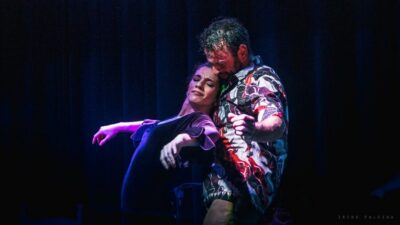
Flamenco Show in Albayzín – Jardines de Zoraya
Read our review →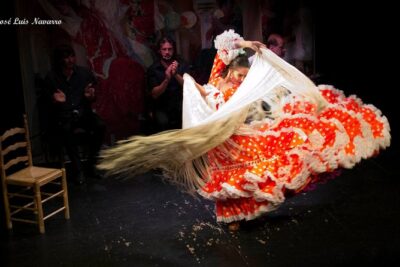
Flamenco Show Tickets to the Triana Flamenco Theater
Read our review →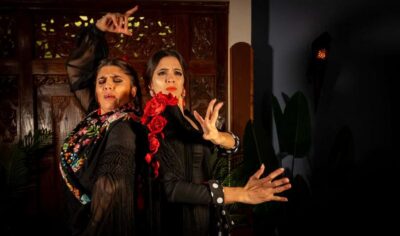
Private Tour: Tapas, Wine & Flamenco Show in Barcelona’s Old Town
Read our review →
Barcelona Old Town Night Small Group Tour with Tapas & Flamenco
Read our review →Browse the lists this tour appears in