
Review · BARCELONA
Barcelona Old Town Tour With Optional Flamenco Show
Barcelona’s Old Town tour turns a short walk into a lively introduction to the city’s layered past. You’ll move from a square honoring human towers to Roman roads, medieval power, a mysterious skull on a bridge, and the glittering exterior of Palau de la Música Catalana. I like the small maximum of 15 people, and I like the late 4 p.m. start, which leaves your morning and early afternoon free.
The tour is especially useful if you’re seeing Barcelona for the first time or have only a day or two. The main drawback is its limited length: 90 minutes gives you a good orientation, but not time to enter every major building. The flamenco option also runs only on Fridays and Saturdays, with entry at 9 p.m.
Key points at a glance
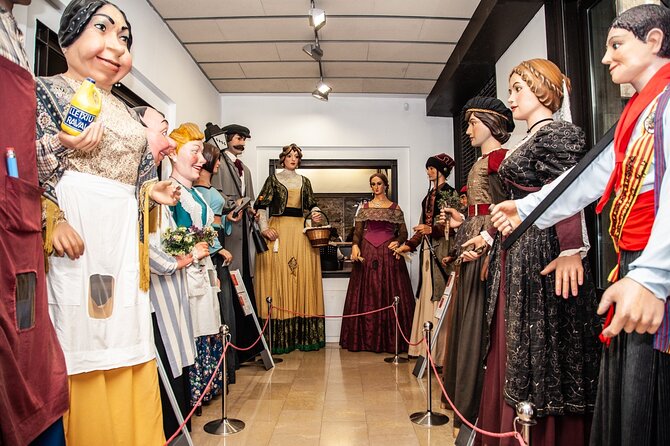
- Human towers begin the story: Plaça Sant Miquel introduces the Catalan tradition of building people into towering formations.
- Roman and medieval Barcelona meet: Plaça de Sant Jaume and Plaça del Rei reveal how the city changed over centuries.
- The Bishop’s Bridge adds a bit of mystery: You’ll hear about the skull and dagger carved into the bridge and its supposed wish-granting power.
- The route is compact and focused: Six stops fit into about 90 minutes, making this a useful first look at the Old Town.
- The late start works well: At 4 p.m., you can spend the morning at another sight and still make this tour.
- The flamenco add-on is selective: On Fridays and Saturdays, you can attend a one-hour show at 9 p.m. with a free drink.
Why this short Barcelona walk works
Barcelona can feel confusing at first. The Old Town is a maze of narrow streets, small squares, grand churches, government buildings, and traces of Roman Barcelona hidden under later construction. This tour gives you a simple route through that maze without asking you to spend half a day on a formal city tour.
I like the way the stops move through different periods rather than repeating the same kind of sight. You begin with a living Catalan tradition, then look at Roman street planning, medieval government, Gothic architecture, and early twentieth-century Modernisme. That mix gives you a better sense of Barcelona than a walk focused only on church facades.
The format is personal but not private. With a maximum of 15 people, you should have a better chance of hearing the guide than you would in a large group. The Dutch-language feedback about guide Eoghan describes an enthusiastic and informative afternoon, which fits the tour’s aim: clear stories, a brisk pace, and enough local detail to make the streets easier to read.
This is a walking orientation, not a museum visit. Admission is free at each listed stop because the route focuses on outdoor sights and explanations. If you want to enter Barcelona Cathedral or Palau de la Música Catalana, you’ll need to arrange that separately.
More Flamenco and Tapas Walking Tours in Barcelona
- Private Tour: Tapas, Wine & Flamenco Show in Barcelona’s Old Town
★ 5.0 · 317 reviews - Barcelona Old Town Night Small Group Tour with Tapas & Flamenco
★ 4.5 · 277 reviews - Montjuïc Walking Tour With Optional Flamenco Show
★ 5.0 · 196 reviews
Starting at Plaça Sant Miquel with human towers
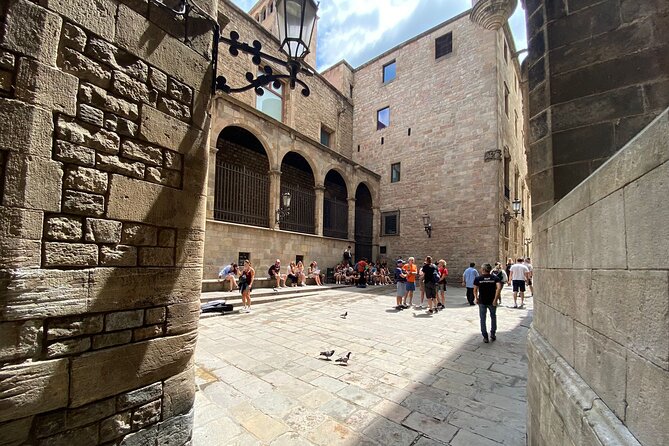
The meeting point is Plaça de Sant Miquel in Ciutat Vella, Barcelona’s Old Town. The tour begins at 4 p.m., so arrive with enough time to find the square and locate the guide before the group moves off.
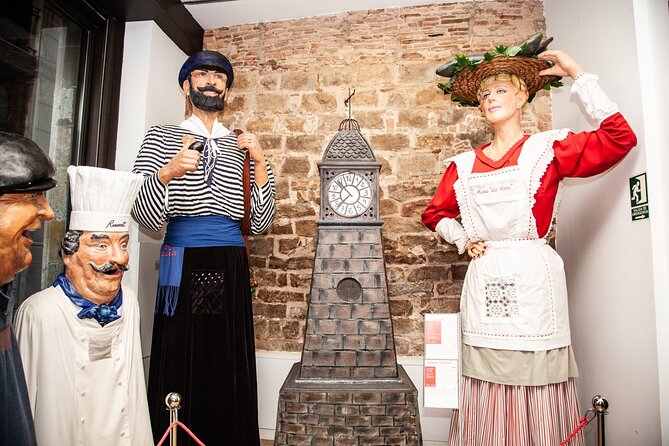
The first stop uses a public monument to explain castells, the Catalan tradition of human towers. This is a clever opening because it introduces a part of local culture that you might otherwise miss while looking only at buildings. You’ll learn how a monument celebrates the impressive feat of people forming towers, with participants supporting one another in carefully arranged layers.
The stop lasts about 20 minutes, making it the longest on the route. That extra time suggests the guide will use the square to set the scene before leading you deeper into the old city. It is also a good place to ask questions early, while the group is still getting comfortable.
Do not expect a full performance. The focus is on the monument and the cultural idea behind it. Still, this is a more distinctive beginning than the usual opening lecture about dates and kings.
Plaça de Sant Jaume and Barcelona’s Roman beginnings
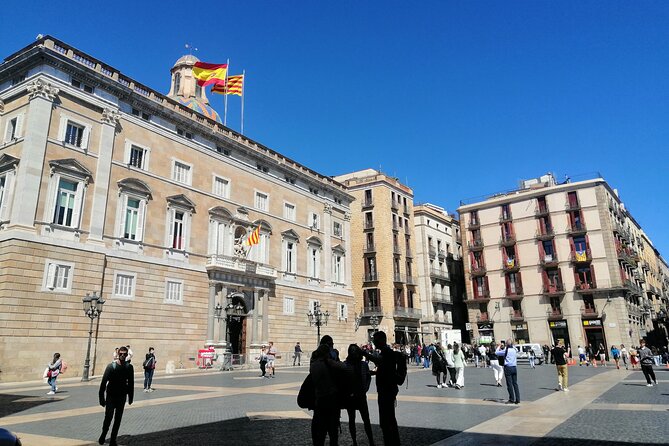
From Plaça Sant Miquel, the route continues to Plaça de Sant Jaume, the main public square of the Gothic Quarter. City Hall faces the seat of the Catalan government here, so the square remains tied to public life as well as history.
The guide explains how old roads once met in this area, linking Roman colonies in a much earlier Barcelona. That detail helps you picture the city before the medieval lanes and grand civic buildings took their present form. You are not just looking at a plaza. You are learning why this location mattered in the first place.
The stop lasts about 10 minutes. That is enough for orientation and a few key stories, but not a long architectural lecture. The square can also be an active public space, so the guide’s commentary matters. Look up at the surrounding buildings, then let the explanation connect them to the city’s political role.
I find this kind of stop useful because it gives you a reference point. After the tour, you can return to Plaça de Sant Jaume and understand it as both a civic center and a place shaped by much older routes.
The Bishop’s Bridge and its carved warning
The Pont del Bisbe is one of the route’s most memorable details. This neo-Gothic bridge crosses the narrow street between historic buildings and looks much older than it is. It dates from the 1920s, a fact that complicates the usual picture of the Gothic Quarter as a perfectly preserved medieval district.
The guide points out the dagger in a skull and explains the bridge’s connection with local legend. You’ll also hear how it may grant wishes. That mix of architecture, dark symbolism, and folklore gives the walk a bit of fun without taking it too far from the city’s history.
The stop takes about 15 minutes. Use that time to inspect the bridge rather than simply photographing it and moving on. Details like the skull are easy to miss if you are walking alone, especially in a narrow street where the eye is drawn toward the dramatic arch above.
This is also a good example of what a guide adds. The bridge is attractive in pictures, but the story makes it memorable. You learn to look for the small features that give Barcelona’s Old Town its character.
Another stage worth an evening:
- Barcelona: Tablao Flamenco Cordobes with Food/Drink Options
★ 4.6 · 4,368 reviews - Barcelona: Flamenco Show with Drink Option at La Rambla
★ 4.7 · 3,770 reviews - Tablao Flamenco Cordobes on Rambla Barcelona with Dinner Option
★ 4.5 · 2,756 reviews - Barcelona: Flamenco Show with Dinner at Tablao de Carmen
★ 4.7 · 2,009 reviews
Barcelona Cathedral and the Gothic Quarter’s complicated identity
Barcelona Cathedral is the heart of this part of the Old Town. The route pauses here for about 15 minutes, with the guide explaining why the building may not be as purely Gothic as it first appears.
That is a valuable correction to the quick label most people use. Historic buildings often contain work from different periods, and the cathedral is a good place to consider how later changes can shape the way we see the past. The guide’s job here is not simply to identify the style, but to point out where the story is more complicated.
The tour does not include an interior visit, so plan your expectations carefully. You will see the cathedral from outside and hear the explanation, but this experience is not a substitute for touring the building itself. If you want to go in, set aside separate time and check the current visiting arrangements before you arrive.
Still, the short stop works well in the sequence. By this point, you have already heard about Roman routes and medieval public power. The cathedral shows how religion and architecture became central to the old city’s identity.
Plaça del Rei above the Roman thoroughfare
Plaça del Rei, or King’s Square, brings the tour to one of the Old Town’s strongest historical settings. The square was built above what was once a Roman thoroughfare, so the guide can connect the surface you see with the city below and beneath it.
This is where the different layers of Barcelona begin to make sense. Roman movement shaped the area, medieval rulers gave it political importance, and later generations preserved and presented its buildings as part of the Gothic Quarter. You are seeing a city built over itself, not a single period frozen in place.
The stop lasts about 15 minutes. That is enough time to take in the square and hear the main explanation, though anyone who enjoys archaeology or medieval architecture may want to return later for a longer visit elsewhere in the area.
I like this stop because it rewards a slower way of looking. Instead of asking only what a building is, you start asking what was here before it and why the street pattern survived.
Ending near Palau de la Música Catalana
The final sight is the exterior of Palau de la Música Catalana, reached at the end of a winding street. This modernist palace for the arts provides a sharp change from the earlier Roman and medieval stops.
You will see the outside rather than attend a concert or tour the interior. Even so, the building gives the walk a strong finish because it shows Barcelona’s later artistic ambition. The route has moved from ancient roads and medieval power to the city’s modernist cultural style.
The stop lasts around 15 minutes. That is enough for the guide to explain what makes the palace important and for you to appreciate its setting. If modernist architecture is a major reason for your visit, treat this as an introduction, not a full examination. You may want to return for an interior tour or performance separately.
The official end is at Plaça Lluís Millet, in front of the caganer.com shop. That detail matters because the ending is not at the starting square. You can plan your evening from this location instead of assuming you will finish where you began.
Adding the Friday or Saturday flamenco show
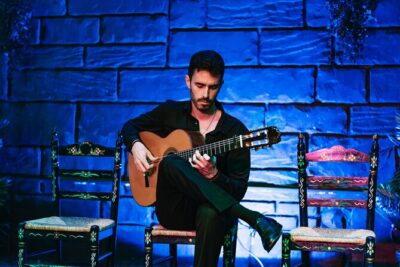
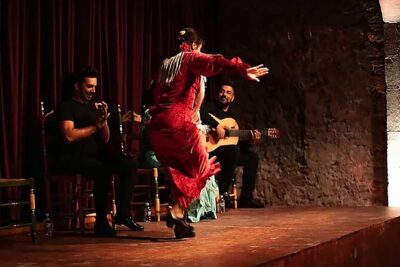
The optional flamenco upgrade adds a one-hour show with a free drink. Entry is at 9 p.m., and the option is available on Fridays and Saturdays only. When you arrive, give the name used during booking.
The timing makes the add-on easy to pair with the walking tour. You finish the Old Town route in the early evening, leaving a gap before the show. That gives you time for dinner or a short rest, though the tour information does not specify the venue’s location or the travel time between the walking route and the performance. Check those details before booking the upgrade.
The flamenco show changes the value calculation. If you already planned to see a performance, adding it may save you the trouble of arranging a separate ticket. If flamenco is not a priority, the walking tour works perfectly well on its own.
Remember that the free drink is included with the show ticket, not with the walking tour alone. The upgrade is also not offered every day, so do not count on it for a Sunday through Thursday schedule.
Timing, group size, and practical value
The full walking experience lasts about 90 minutes. Six stops in that time means the pace is purposeful. You will get explanations at each place, but you should not expect long breaks, extended photography time, or entry into every sight.
The 4 p.m. start is one of the best features. You can spend the morning at another attraction, have lunch, or handle a museum visit before meeting the guide. The tour then fills a late afternoon slot when you may want a structured activity without committing to a full-day program.
A maximum of 15 people keeps the group manageable. It does not promise a private tour, but it should make it easier to stay with the guide and hear the stories. Most people can participate, service animals are allowed, and the meeting point is close to public transportation.
The price is not provided here, so I cannot judge the exact cost. As a value proposition, the walk makes the most sense if you want context rather than paid admission. You are paying for the guide’s route and explanations, not a bundle of entry tickets. Compare the total price with a larger group tour, and decide how much you value a smaller group and a short, focused schedule.
Free cancellation is available when you cancel at least 24 hours before the start time. Inside that window, the payment is not refunded and changes are not accepted. Keep the local cut-off time in mind when your plans are uncertain.
Who should book this Old Town experience?
I would choose this tour if you are new to Barcelona, have limited time, or want help getting oriented before exploring alone. The stops cover enough ground to show how Roman, medieval, and modern Barcelona fit together, while the small group keeps the experience more personal than a large city walk.
It also suits anyone who likes stories attached to small details. The human tower monument, the skull and dagger, and the supposedly wish-granting bridge give the tour a lighter touch than a list of dates and architectural labels.
I would look elsewhere if you want extensive interior visits, a slow photography walk, or detailed instruction about every Gothic building. The 90-minute format is an introduction. It gives you a map in your head, then leaves you free to return to the places that caught your interest.
Should you book it?
Book it if you want a compact, guided look at Barcelona’s Old Town with a maximum group size of 15 and a convenient 4 p.m. start. The route is especially useful on a first visit, and the guide’s local explanations add meaning to places that can otherwise blur together.
Add the flamenco show only if your dates are Friday or Saturday and you want a 9 p.m. performance with a free drink. Skip the upgrade if you prefer to choose your own evening plans. Either way, this is a sensible first step into the Gothic Quarter, provided you understand that it is a guided outdoor overview, not a full sightseeing pass.
FAQ
How long does the Barcelona Old Town tour last?
The walking tour lasts approximately 1 hour and 30 minutes.
What time does the tour begin?
The tour starts at 4 p.m.
Where does the tour start?
The meeting point is Plaça de Sant Miquel in Ciutat Vella, Barcelona’s Old Town.
Where does the tour finish?
The tour ends at Plaça Lluís Millet, in front of the caganer.com shop.
How many people can join the tour?
The group has a maximum of 15 people.
Is the flamenco show available every day?
No. The flamenco upgrade is available on Fridays and Saturdays, with entry at 9 p.m. It includes a free drink and lasts one hour.
Can I cancel for a full refund?
Yes, if you cancel at least 24 hours before the experience start time. Cancellations or changes made within 24 hours are not accepted and are not refunded.
Newly listed in Barcelona
- Barcelona Guitar Trio & Flamenco Show at Royal Artistic Circle★ 5.0 · 13 reviews
- Barcelona Private Gothic Quarter Tour with Flamenco Show★ 5.0 · 6 reviews
- Private Tapas Walking Tour in Barcelona Old Town and Flamenco Show★ 4.5 · 19 reviews
- Barcelona Tapas & Wine Walking Tour with Optional Flamenco★ 5.0 · 70 reviews
- Tapas, Wine and Flamenco Private Tour in Barcelona★ 4.5 · 90 reviews
- Private Barcelona Walking Tour with Flamenco Show & Tapas Dinner★ 5.0 · 11 reviews
- Authentic Flamenco Show at the Barcelona Flamenco Theater★ 5.0 · 64 reviews
- Make A Flamenco Bag With A Designer★ 4.5 · 4 reviews
Flamenco and Tapas Walking Tours, compared.
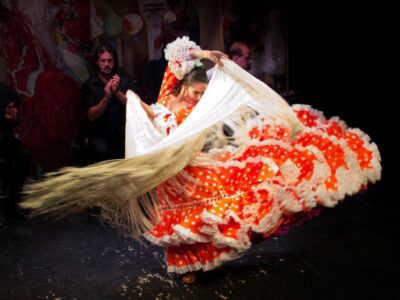
Live Flamenco Show at “Teatro Flamenco Triana”
Read our review →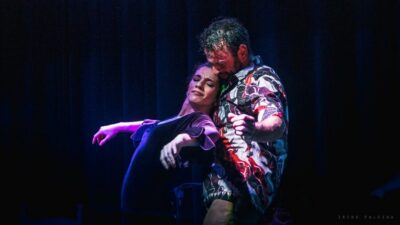
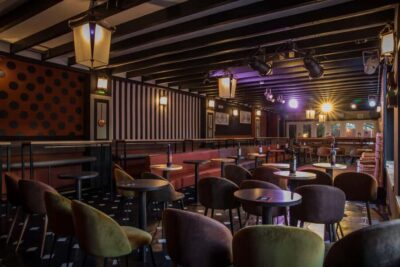
Flamenco Show in Albayzín – Jardines de Zoraya
Read our review →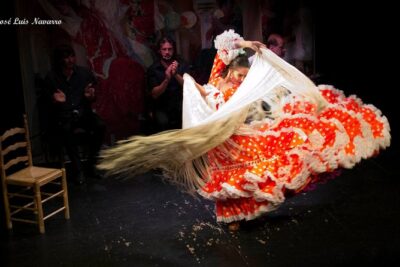
Flamenco Show Tickets to the Triana Flamenco Theater
Read our review →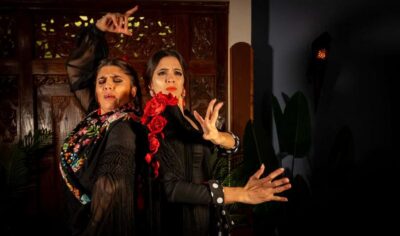
Private Tour: Tapas, Wine & Flamenco Show in Barcelona’s Old Town
Read our review →
Barcelona Old Town Night Small Group Tour with Tapas & Flamenco
Read our review →Browse the lists this tour appears in