
Review · BARCELONA
Barcelona: Montjuïc Walking Tour With Optional Flamenco Show
Montjuïc is Barcelona’s great storybook hill, where castle walls, flower gardens, waterfalls, and city views unfold in one downhill walk. You’ll hear how this unusual height connects to Barcelona’s beginnings, then follow paths through places tied to Catalan dance, witches’ legends, the 1929 International Exposition, and flamenco.
I like the route’s mix of big panoramas and small cultural details, especially the statues honoring La Sardana and Carmen Amaya. I also like the choice of adding the castle interior or an evening flamenco show. The main drawback is practical: expect stairs, and one past participant found the guiding too thin for the price, so the experience depends heavily on your guide.
Key points to know
- Montjuïc Castle begins the story: The tour starts outside the fortress, with an optional guided visit inside before the walking route.
- The walk mostly heads downhill: You’ll pass viewpoints and gardens, but there are stairs and uneven sections.
- Mirador del Alcalde brings the best early panorama: It is a useful place to understand Barcelona’s setting from above.
- Dance is a central theme: La Sardana and Carmen Amaya help connect Catalan tradition with flamenco.
- The Magic Fountain is the finish: The route ends near the Museum of Catalan Art and the fountain’s waterfall-lined approach.
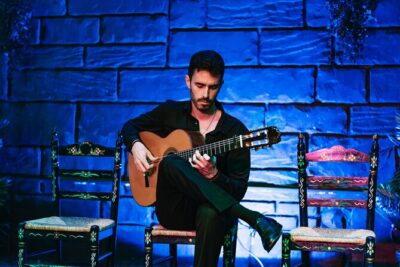
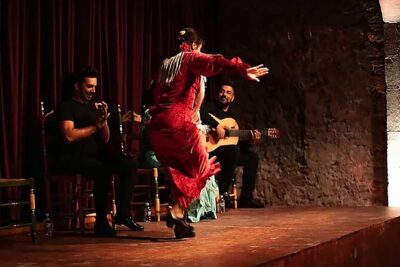
- The flamenco add-on is a separate evening event: It takes place at El Paraigua, in a small venue inside the walls of an 11th-century convent, with one drink included.
Why Montjuïc makes a good first Barcelona walk
Montjuïc gives you a different introduction to Barcelona than the usual Gothic Quarter or Gaudí route. Instead of narrow streets and crowded plazas, you get open viewpoints, formal gardens, monuments, and a long look across the city.
The hill also carries several layers of Barcelona’s story. At the meeting point, your guide explains how Montjuïc connects with the city’s foundation. From there, the route moves through military history, migrant communities, Catalan customs, flamenco, folklore, and the great public works linked to the 1929 Barcelona International Exposition.
That range is the main reason to consider this tour. You are not simply walking from one photo stop to another. The guide gives the hill a sequence of meanings, so the castle, gardens, statues, and theaters feel connected.
The experience lasts about two to three hours and is conducted in English. At $34 per person, the price is reasonable if your guide adds real context and keeps the group moving well. It is less attractive if you already know Montjuïc and mainly want a casual stroll, since much of the route can be walked independently.
More Flamenco and Tapas Walking Tours in Barcelona
- Private Tour: Tapas, Wine & Flamenco Show in Barcelona’s Old Town
★ 5.0 · 317 reviews - Barcelona Old Town Night Small Group Tour with Tapas & Flamenco
★ 4.5 · 277 reviews - Montjuïc Walking Tour With Optional Flamenco Show
★ 5.0 · 196 reviews
Starting at Montjuïc Castle

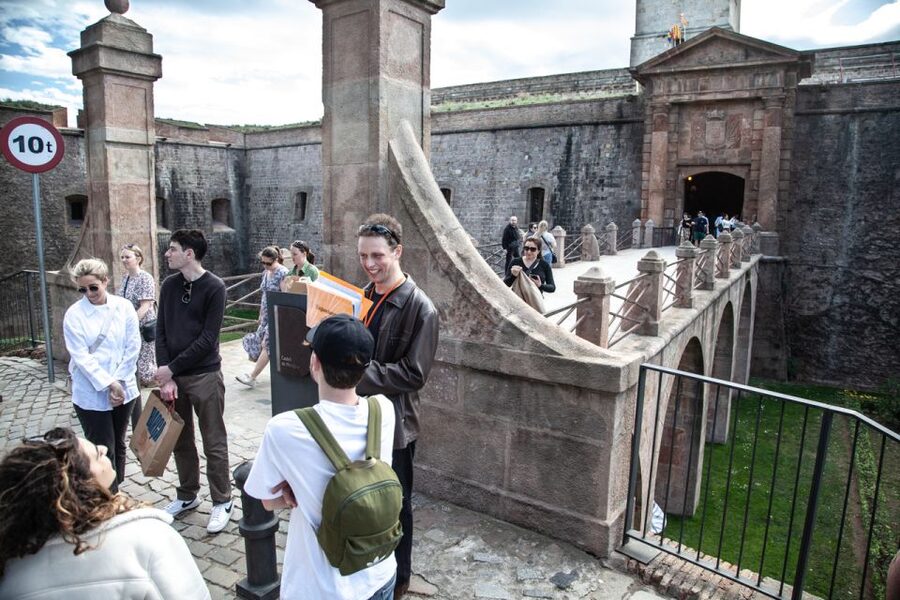
The meeting point is outside Montjuïc Castle at 41.36396300563352, 2.167071231085228. Paste those coordinates into Google Maps rather than relying only on the name of the attraction. Your guide carries an ExperienceFirst sign.
This starting point matters because Montjuïc Castle sits high above the city. You begin with the hill’s military presence around you, then gradually move through its gardens and cultural sites. The opening explanation about the hill’s role in Barcelona gives you a useful frame for everything that follows.
You can upgrade to enter the castle with a guide before the walking tour. The fortress dates to the 17th century and provides additional views over Barcelona. If you choose this option, allow extra time before the main walk. The castle visit is not simply an indoor add-on. It gives you a clearer sense of why this hill mattered as a lookout and defensive position.
The castle portion is most useful for visitors who enjoy history and want more than photographs from the outside. If your main interest is gardens, public art, and city views, the standard walking tour may be enough.
Mirador del Alcalde and the hill’s human stories
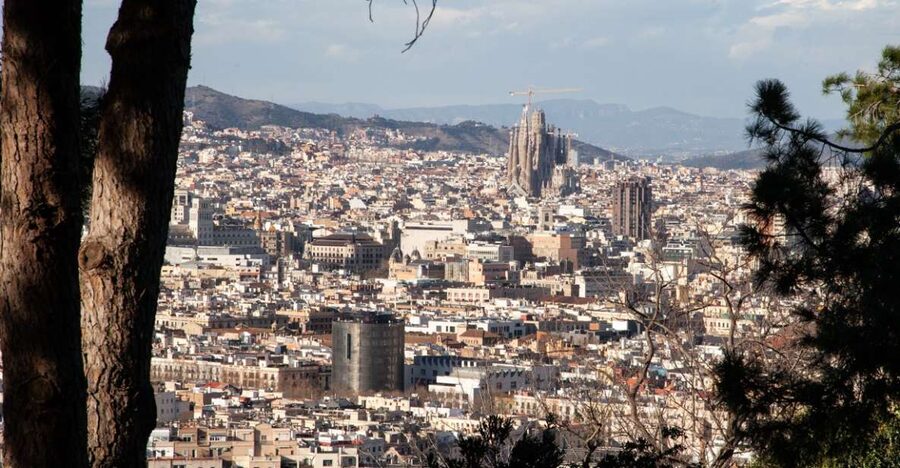
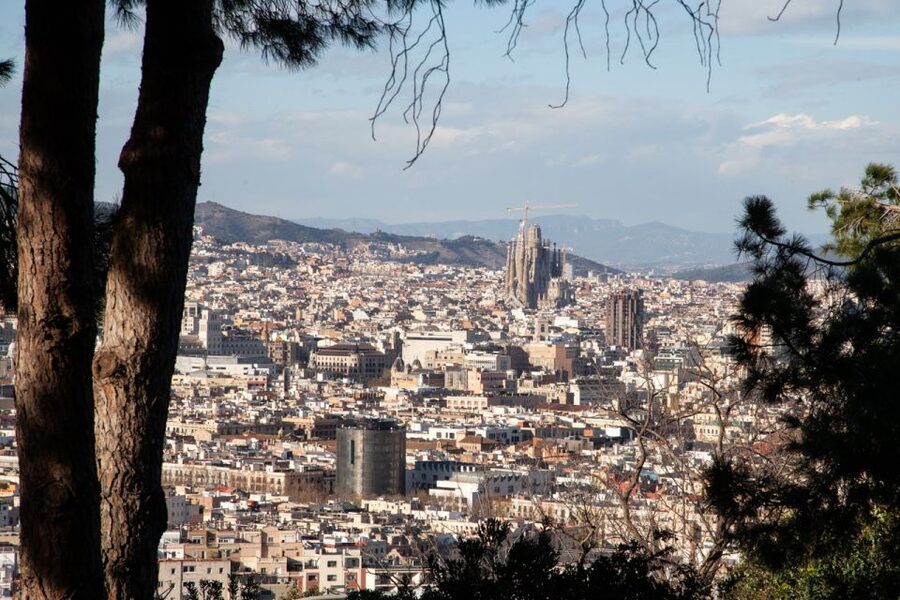
From the castle, the route heads toward Mirador del Alcalde. This viewpoint is one of the strongest parts of the walk because it lets you pause and take in Barcelona from above.
The guide also tells the story of an ancient migrant community that once lived on the hill. That detail gives Montjuïc a more human character. The area was not always a polished series of gardens and monuments. Its uses and communities changed over time, and the tour explains some of those shifts while you walk.
Bring your camera here, but do not rush the stop. The views are one of the clearest reasons to come up Montjuïc, and the viewpoint helps you understand the city’s scale before you descend through the gardens.
The trade-off is that visibility depends on the weather. The tour operates rain or shine, so a gray day may soften the views. Comfortable shoes and a light rain layer are sensible choices, since the walk continues outdoors in all conditions.
Joan Brossa Gardens and Catalan dance
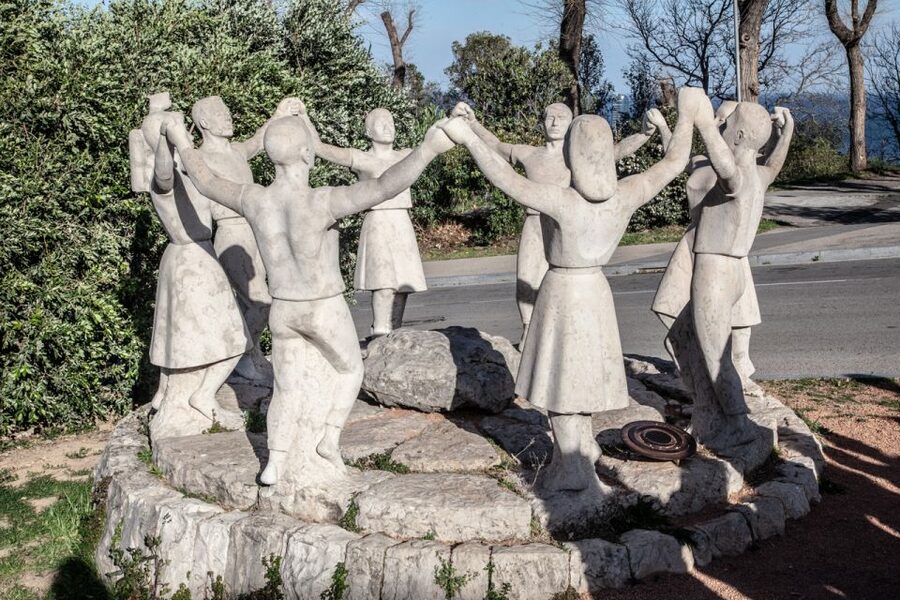
The Jardins de Joan Brossa bring a lighter, more playful feel to the route. You walk among flowers, sculptures, and garden paths while your guide explains a statue connected with La Sardana, the traditional Catalan circle dance.
This is a useful cultural stop because La Sardana is not treated as a decorative symbol alone. The guide connects it to local identity and the customs of Catalonia. You get a small window into a regional tradition that can be easy to miss when your Barcelona schedule is focused on architecture.
The gardens also give your legs a break from the more formal history of the castle. You are still walking, but the setting is calmer and more open. The route’s variety works well here: a viewpoint, then a garden, then a monument with a clear cultural story.
A guide’s ability to explain these smaller details is important. Past groups have had excellent experiences with guides including Thomas, Eoghan, and Daria, who were praised for humor, warmth, and strong local information. But one participant felt the route became little more than a walk downhill with limited explanation. That contrast is worth keeping in mind when judging the $34 price.
Another stage worth an evening:
- Barcelona: Tablao Flamenco Cordobes with Food/Drink Options
★ 4.6 · 4,368 reviews - Barcelona: Flamenco Show with Drink Option at La Rambla
★ 4.7 · 3,770 reviews - Tablao Flamenco Cordobes on Rambla Barcelona with Dinner Option
★ 4.5 · 2,756 reviews - Barcelona: Flamenco Show with Dinner at Tablao de Carmen
★ 4.7 · 2,009 reviews
Carmen Amaya and the Spanish dance connection
The next dance monument honors Carmen Amaya, one of flamenco’s most famous dancers. This stop shifts the focus from Catalan tradition to the passion and force of flamenco.
That connection helps prepare you for the optional evening show. The daytime walk does not include a performance, but the Carmen Amaya monument gives the dance add-on a cultural link rather than making it feel like an unrelated extra.
If you are visiting Barcelona for the first time, this part of the route adds useful context. You see that dance in Catalonia has more than one expression, and the tour places those traditions side by side without treating them as interchangeable.
The stop is also brief enough that it does not overwhelm the walking portion. You get a story, a monument, and a chance to consider the relationship between local identity and performance.
Laribal Gardens and the witches’ path
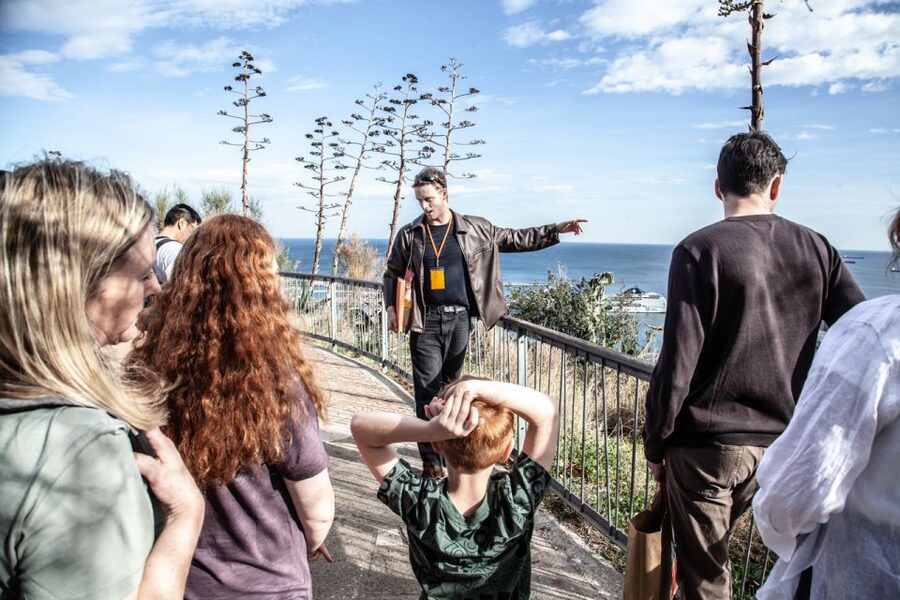
Laribal’s Gardens are among the most atmospheric parts of the walk. Expect flowers, sculptures, water features, and paths that lead downward through a more romantic setting.
Here the guide turns to Montjuïc’s mystical side. Witches and wizards were once said to gather in this area, and the route follows the same general direction down through the gardens. The story adds a touch of folklore without requiring the whole tour to become theatrical.
This is where the tour’s mix of fact and legend works best. You are looking at real gardens and public spaces, while the guide gives you the old stories that helped shape the hill’s reputation. It is a good section for photos, but the steps can make it less relaxed than the scenery suggests.
The tour is not suitable for wheelchair users, and it is also not suitable for strollers because of the stairs. If you have trouble with steps, Montjuïc may be easier to enjoy through selected viewpoints rather than this complete route.
The Greek Theater and the 1929 exposition
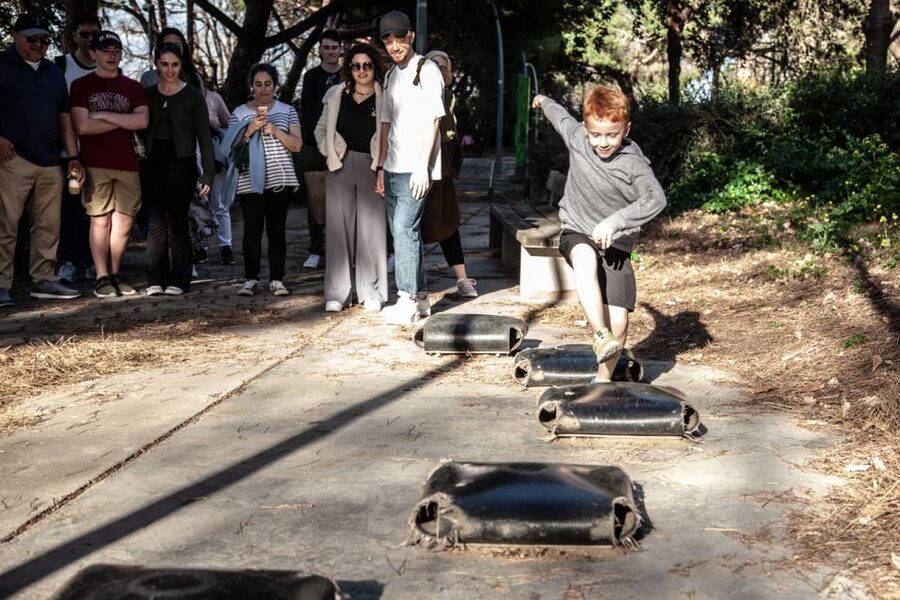
The descent continues to the Teatre Grec, a Greek-style theater built for the 1929 Barcelona International Exposition. This stop shows how Montjuïc was reshaped for major public events.
The theater gives the hill another change of mood. You move from fortress to garden, then from folklore to a purpose-built cultural venue. The guide explains the theater’s place in the exposition, helping you see how Barcelona used Montjuïc to present itself to the world.
The route does not stay inside the theater, so you should think of this as a historical and architectural stop rather than a performance visit. It is still worthwhile because it shows how the hill became a collection of public gardens, monuments, and cultural buildings instead of remaining only a military height.
By this point, you have walked downhill for much of the route. That direction is easier than climbing the entire hill, but it does not mean the tour is effortless. There are stairs up and down, and one participant specifically warned first-time visitors to expect quite a few.
Finishing at the Magic Fountain
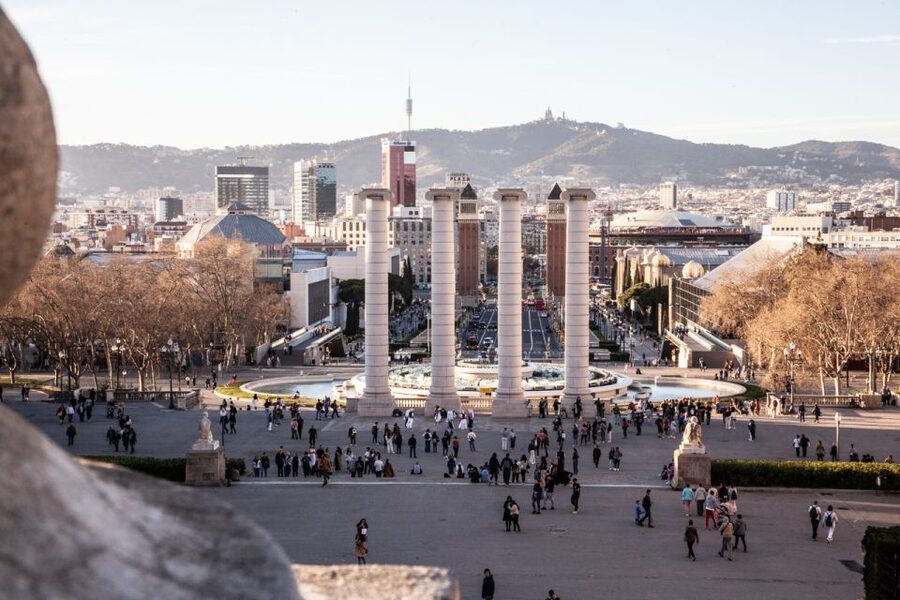
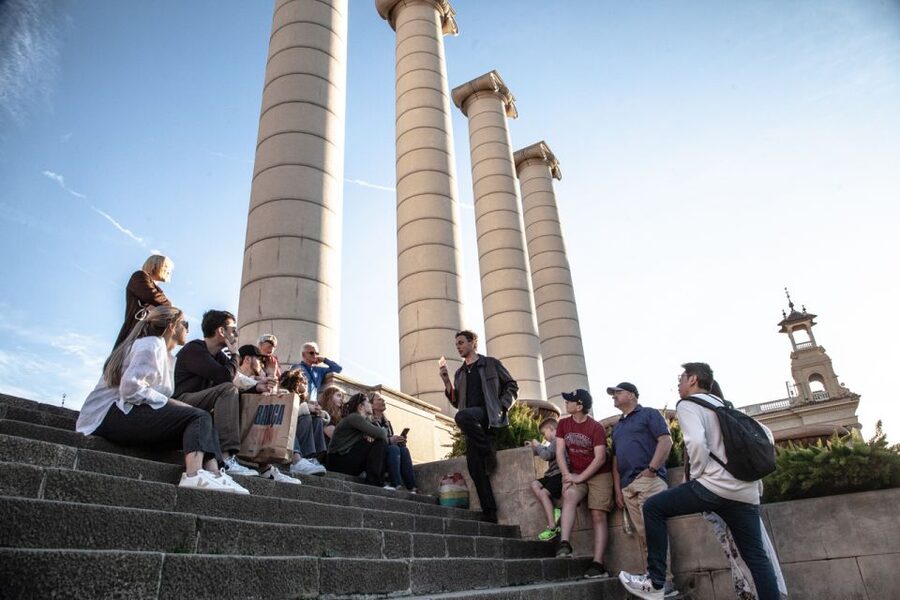
The final stop is the Magic Fountain of Montjuïc. The fountain is surrounded by imposing architecture, including the Museum of Catalan Art, and a walkway lined with shallow waterfalls.
This is an effective finish because it brings together the hill’s main themes: ceremony, public design, water, and wide city views. Even if you have seen photographs of the fountain, arriving there after the gardens and monuments gives the place more context.
The tour ends at the fountain, not back at the castle. Plan your onward route from the lower part of Montjuïc. That one-way design saves you from retracing the hill, but it also means you should not leave a car, bag, or other transport arrangement at the starting point without considering the return journey.
The fountain is also a handy place to continue your Barcelona sightseeing. The tour does not include a meal or entry to the Museum of Catalan Art, so you will need separate plans if you want to visit either one.
Is the castle upgrade worth adding?
The castle upgrade is best for visitors who want a fuller Montjuïc visit and enjoy military history. You receive a guided visit inside the 17th-century fortress before the gardens and viewpoints, plus more chances to look across Barcelona.
I would add it if you have not visited the castle before, especially if you are already making the trip up the hill. The combination gives you a stronger sense of Montjuïc as both a defensive site and a public park.
You can skip it if your schedule is tight or if your main goal is the gardens and Magic Fountain. The standard route already includes the castle exterior, viewpoints, and a substantial walk. The supplied information does not give a separate price for the upgrade, so check the total before booking.
One practical point: the tour begins outside the castle, but the guided interior visit is described as taking place before the main walking route. Read the selected option and arrival time carefully so you are at the meeting point early enough.
The optional flamenco show at El Paraigua
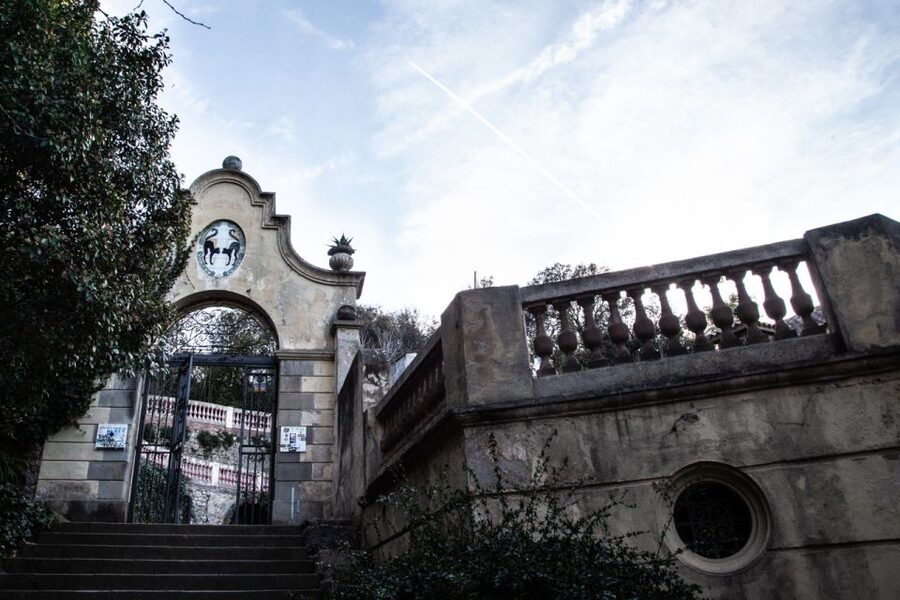
The flamenco add-on extends the experience into the evening. The show takes place at El Paraigua, a historic tapas bar at Carrer del Pas de l’Ensenyança 2. The performance space is downstairs, inside the walls of an 11th-century convent, giving the event a close, old-world setting.
Your ticket includes a complimentary drink. The show begins at 9 p.m. for one of the available options, and the upgrade is offered at 7 and 9 p.m. on Fridays and Saturdays, plus 7 p.m. on Wednesdays.
This is a good choice if you want a compact cultural evening after the daytime walk. The intimate venue should suit you if you prefer a small performance space to a large production. It also makes sense for anyone interested in seeing flamenco after learning about Carmen Amaya and dance traditions on Montjuïc.
Check the day and time before you commit. The show is not offered every evening under the times provided, and it is held at a different address from the walking tour. When you arrive, give the name used for the booking.
The flamenco option also changes the value calculation. At the basic $34 price, you are paying for the walking tour. The show and drink may make the combined package more worthwhile, but only if the performance time fits your evening plans.
Guides, pace, and what can affect the experience
The strongest praise has gone to guides who combine humor with clear local stories. Thomas was described as friendly and well informed, while Eoghan and Daria were praised for being funny, kind, and able to point out memorable places.
That matters on Montjuïc because the route itself is easy to follow. A guide earns the fee by explaining why each stop matters, not simply by leading you downhill. One less positive experience found the tour poorly managed and short on information, with the feeling that it could have been done alone.
I would book this tour if you value interpretation and want someone to connect the hill’s many pieces. I would not book it solely for access to the gardens, since independent walking is possible if you are comfortable navigating the paths and stairs.
The tour has a high overall rating of 4.8 from 21 reviews, but the range of individual experiences still offers the practical lesson: confirm the meeting details, arrive ready for steps, and choose the castle or flamenco option only if you want those added elements.
Who should book this Montjuïc experience?
This tour suits you if:
- You are visiting Barcelona for the first time and want an introduction to Montjuïc.
- You enjoy viewpoints, gardens, monuments, and stories more than a fast checklist of major sights.
- You want an English-speaking guide to explain Catalan dance and local folklore.
- You can manage stairs and a two to three hour outdoor walk.
- You like the idea of pairing a daytime history walk with an intimate flamenco show.
It is less suitable if you need a fully accessible route, dislike walking downhill on steps, or already know Montjuïc well. It may also disappoint if you expect a long guided castle tour but choose the basic option.
At $34, I see the best value in the standard tour when you are new to the hill and your guide is engaged. Add the castle if you want the full fortress experience. Add flamenco if your visit falls on Wednesday, Friday, or Saturday and you want an easy cultural evening with a drink included.
Should you book it?
Book this Montjuïc walking tour if you want views plus context, not just a ride to the top of the hill. The route covers the castle, Mirador del Alcalde, Joan Brossa Gardens, Carmen Amaya, Laribal Gardens, the Greek Theater, and the Magic Fountain in a logical downhill flow.
Before booking, be honest about the stairs and the weather. Wear comfortable shoes, expect the tour to run rain or shine, and use the exact meeting coordinates. For a first Barcelona visit, especially with the flamenco add-on, this is a practical way to spend part of a day and evening. If you prefer to set your own pace or already know the area, save the $34 and explore Montjuïc independently.
FAQ
Where does the Montjuïc walking tour meet?
The meeting point is outside Montjuïc Castle at 41.36396300563352, 2.167071231085228. Your guide will hold a sign that says ExperienceFirst.
How long does the walking tour last?
The walking tour lasts about two to three hours. Check availability for the exact starting time.
Is the tour offered in English?
Yes. The experience includes a live English-speaking guide.
Does the standard tour include entry inside Montjuïc Castle?
No. A guided visit inside the 17th-century fortress is available as an optional upgrade.
Does the tour include the flamenco show?
The flamenco show is an optional upgrade. The show includes one complimentary drink.
Where is the flamenco show held?
The show takes place at El Paraigua, at Carrer del Pas de l’Ensenyança 2. The venue is downstairs inside the walls of an 11th-century convent.
When is the flamenco upgrade available?
It is available at 7 and 9 p.m. on Fridays and Saturdays, and at 7 p.m. on Wednesdays.
Is the tour accessible for wheelchair users or strollers?
No. The route includes stairs and is not suitable for wheelchair users or strollers.
What should you bring?
Wear comfortable shoes. The tour takes place outdoors and operates rain or shine.
Can you cancel the booking?
Yes. You can cancel up to 24 hours in advance for a full refund. A reserve now and pay later option is also available.
Newly listed in Barcelona
- Barcelona Guitar Trio & Flamenco Show at Royal Artistic Circle★ 5.0 · 13 reviews
- Barcelona Tapas & Wine Walking Tour with Optional Flamenco★ 5.0 · 70 reviews
- Barcelona Private Gothic Quarter Tour with Flamenco Show★ 5.0 · 6 reviews
- Private Tapas Walking Tour in Barcelona Old Town and Flamenco Show★ 4.5 · 19 reviews
- Tapas, Wine and Flamenco Private Tour in Barcelona★ 4.5 · 90 reviews
- Private Barcelona Walking Tour with Flamenco Show & Tapas Dinner★ 5.0 · 11 reviews
- Flamenco Show at Theater Flamenco Laietana in Barcelona★ 3.5 · 2 reviews
- Authentic Flamenco Show at the Barcelona Flamenco Theater★ 5.0 · 64 reviews
Flamenco and Tapas Walking Tours, compared.
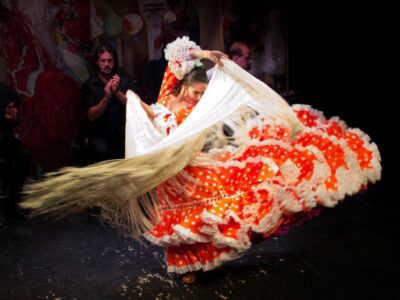
Live Flamenco Show at “Teatro Flamenco Triana”
Read our review →

Flamenco Show in Albayzín – Jardines de Zoraya
Read our review →
Flamenco Show Tickets to the Triana Flamenco Theater
Read our review →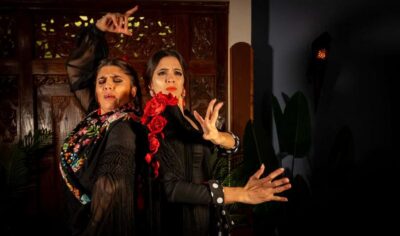
Private Tour: Tapas, Wine & Flamenco Show in Barcelona’s Old Town
Read our review →
Barcelona Old Town Night Small Group Tour with Tapas & Flamenco
Read our review →Browse the lists this tour appears in